
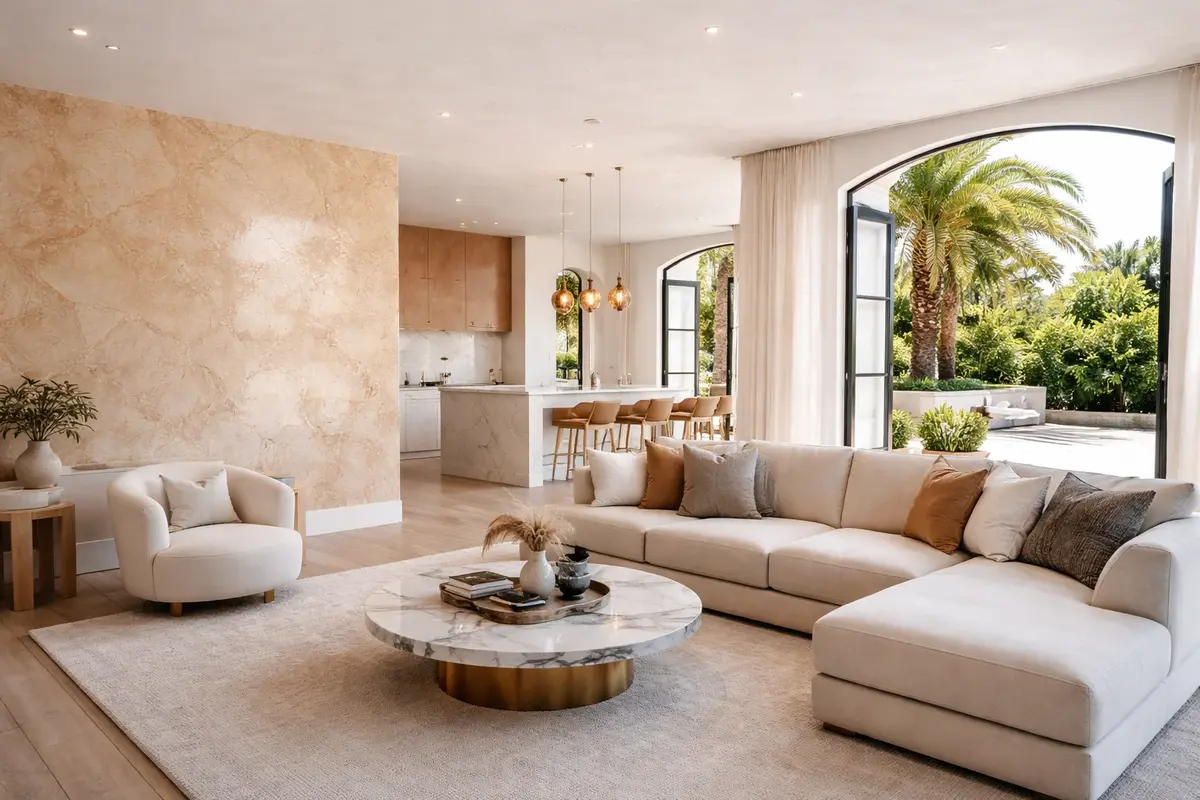
Why Venetian Plastering Is the Top Choice for Luxury Homes in Brisbane
Luxury homes in Brisbane are shifting. Clean lines still matter. Minimalism still plays a role. But something warmer, richer, and more tactile has quietly taken over high-end interiors: Venetian plastering.
Across Brisbane suburbs, from New Farm to Paddington, more homeowners and designers lean towards finishes that age well and feel grounded. Standard paint jobs, even expensive ones, often fall short after a few humid summers. Meanwhile, Venetian plastering continues to gain traction because it behaves differently under pressure both visually and structurally.
There’s also a shift in how luxury is defined. It’s no longer about adding more features; it’s about choosing fewer, better ones. Venetian plastering fits neatly into that mindset. It doesn’t scream for attention, but it quietly carries a room. That subtlety, oddly enough, is precisely what makes it stand out.
Walk into a premium Brisbane home today, and chances are the walls don’t just sit there; they breathe. They catch light differently at every angle. They feel handcrafted, almost like art. That’s exactly why Venetian plastering has become the go-to finish for architects, designers, and homeowners chasing that high-end, magazine-worthy look.
How Brisbane homes shifted toward textured wall finishes
A noticeable shift started happening a few years back across Brisbane builds. Open-plan layouts became standard, ceilings went higher, and natural light flooded interiors. Suddenly, plain painted walls began to feel a bit underwhelming, leading many to discover that Venetian Plastering adds the depth those spaces need.
Designers began experimenting quietly at first. Instead of adding more furniture or decor, attention moved toward the surfaces themselves, where Venetian Plastering started appearing in feature walls, then entire living zones. Not because it was trendy, but because it gave depth without clutter. It allowed rooms to stay minimal while still feeling layered and complete.
There’s a practical side here, too. In Brisbane’s lighting conditions, particularly with strong afternoon sun, walls can look harsh if they’re too flat, but Venetian Plastering softens that effect. It diffuses light instead of reflecting it aggressively.
What Venetian plaster really does to a space visually
Standing in front of a finished wall featuring Venetian Plastering is different from looking at photos online. There’s movement in the surface, but not in an obvious way. It’s not textured like render or patterned like wallpaper. It’s quieter. The surface shifts slightly depending on where light hits, and that creates a sense of depth that’s hard to replicate with standard finishes.
In practical terms, this means a room doesn’t need as much decoration. The wall itself carries part of the visual load. That’s something noticed repeatedly in completed homes. Spaces with Venetian Plastering tend to feel more resolved even before furniture is fully in place. It’s not magic, just material doing its job properly.
There’s also a misconception that more texture equals more visual noise. That’s not the case here. Venetian plaster sits in the middle ground. It adds interest without becoming dominant. That balance is tricky to achieve, and it’s one of the reasons why Venetian Plastering continues to gain traction in higher-end Brisbane projects.
Venetian Plastering and its role in luxury interiors
Luxury is often misunderstood. It isn’t about cramming more things into a room; it’s about refining what’s already there. Venetian Plastering fits that mindset perfectly because it enhances a surface rather than just covering it up. It doesn’t need loud colours to grab attention; it builds a subtle, tactile complexity through its layers.
In real projects, this shows up in how rooms feel rather than how they look in isolation. A living area with Venetian Plastering tends to feel warmer, even if the color palette is neutral. That warmth comes from the material itself, not from added styling. It’s a quieter kind of luxury, one that doesn’t try too hard.
There’s also a level of restraint involved. Not every wall needs it. Overuse can flatten the effect. Experienced designers usually limit Venetian Plastering to key areas, such as feature walls, entry points, or spaces where light plays a major role. That selective application keeps it effective rather than overwhelming.
Cost realities and budget mistakes homeowners make
Costs around Venetian plaster can catch people off guard, mostly because comparisons are made against paint. That’s not a fair comparison. Venetian plaster sits in a completely different category. It involves skilled labour, multiple layers, and time. Trying to treat it as just a more expensive paint job leads to unrealistic expectations.
A common mistake seen on-site is allocating the budget too late in the build. By the time it finishes, funds are already stretched. Venetian Plastering then becomes an afterthought or gets reduced to a small feature, which often undermines its impact. Planning for it early changes everything. It becomes part of the design, not an add-on.
There’s also the issue of chasing cheaper quotes. Not all Venetian plaster applications are equal. Lower-cost options often cut corners in preparation or layering. The result might look acceptable initially, but over time, inconsistencies show up. Fixing that later costs more than doing it properly the first time. That’s a lesson learned repeatedly in real projects.
Venetian Plaster Walls vs Traditional Finishes
| Feature | Venetian Plaster Walls | Standard Paint | Wallpaper |
| Durability | High | Medium | Low |
| Maintenance | Low | Medium | High |
| Moisture Resistance | Excellent | Average | Poor |
| Visual Depth | Rich & layered | Flat | Patterned |
| Longevity | 15–20+ years | 5–7 years | 3–5 years |
| Luxury Appeal | Premium | Basic | Variable |
Installation process and why skill matters so much
The application process for Venetian Plastering isn’t something that can be rushed. Each layer needs time to set before the next one goes on. Rushing this stage leads to uneven finishes. patchiness, or surfaces that don’t polish correctly. It’s one of those trades where patience directly affects the final outcome.
Preparation also plays a bigger role than most expect. The substrate needs to be properly prepared, or the Venetian Plastering won’t adhere correctly. Skipping steps here is a common issue with inexperienced installers. The wall might look fine initially, but small imperfections start appearing over time, especially under changing light conditions.
Then there’s the finishing stage, which is where skill becomes obvious. Polishing Venetian plaster requires technique. Too much pressure, and the surface burns. Too little, and it stays dull. Getting that balance right comes from experience, not just training. That’s why skilled applicators are in demand across Brisbane projects.
Durability, maintenance, and long-term performance
One of the quieter advantages of Venetian plaster, often noted by New Home Builders in Rockhampton, is how well it holds up over time. Unlike paint, it doesn’t chip or peel in the same way. Minor marks can often be polished out rather than repainted. That reduces long-term maintenance, which is something homeowners appreciate after a few years of living with it.
That said, it’s not completely maintenance-free. In high-traffic areas, surfaces can develop wear patterns, a detail New Home Builders in Rockhampton often discuss with clients alongside National Construction Code wall finish standards during the design phase. This isn’t necessarily a flaw. In many cases, it adds character. But expectations need to be realistic.
Moisture is a big deal in Brisbane. When it’s sealed right, Venetian plaster handles our humidity like a champ, but if you cut corners on the sealing, you’re asking for trouble, a point emphasised by New Home Builders in Rockhampton, who value durability.
Design flexibility across modern and classic homes
Venetian plaster doesn’t lock a space into a single style. It works across modern builds, heritage renovations, and everything in between. The finish can be adjusted through color, texture, and sheen. That flexibility makes it easier to integrate into different design approaches without forcing a specific look.
In contemporary homes, it often leans toward smoother, more polished finishes, a versatility that New Home Builders in Rockhampton frequently leverage for modern designs. In older properties, slightly more texture can help tie it into existing elements. That adaptability is one of the reasons it continues to be used across varied projects rather than being confined to a single aesthetic.
There’s also room for experimentation, but it needs to be controlled. Overly bold finishes can dominate a space. Subtlety tends to work better. Small variations in tone or texture usually achieve more than dramatic contrasts. That’s something that becomes clearer through experience rather than theory.
Styling Tips for Venetian Plaster Interiors
A few thoughtful choices can elevate the overall look:
- Pair with warm lighting
- Use natural materials like timber and stone
- Keep decor minimal
- Add contrast through furniture
Too much clutter can take attention away from the walls. Let the plaster shine.
Trade-offs compared to paint and other finishes
No material is perfect, and Venetian plaster Brisbane has its trade-offs. Cost is the obvious one, but time is another. Projects using Venetian plaster take longer to complete, which can create pressure for New Home Builders in Rockhampton working on tight construction schedules. Builders sometimes push back for this reason, especially on large-scale developments.
There’s also less room for last-minute changes, which is why New Home Builders in Rockhampton often encourage finalising design choices early. Once Venetian plaster is applied, altering it isn’t as simple as repainting. That requires decisions to be finalised earlier in the process.
Paint is flexible, sure, but it completely lacks depth. There are other textured finishes out there, but they often end up looking a bit factory-made. Venetian plaster sits in that sweet spot; it’s more of a commitment than paint, but it’s far more refined than any other alternative.
Why do experienced designers keep specifying it repeatedly
Patterns start to show after working across multiple projects. New Home Builders in Rockhampton and interior designers who use Venetian plaster often come back to it. Not in every project, but regularly enough to suggest it solves something other finishes don’t. That consistency isn’t accidental.
A lot of it comes down to reliability. When it’s done by a pro, you get a predictable level of quality, even if the final look is completely one-of-a-kind, a standard of excellence consistently delivered by New Home Builders in Rockhampton. That mix of control and character is a massive win in design work where you want something unique that still meets high expectations.
There’s also a level of trust built over time. Knowing how the material behaves under different lighting conditions, how it ages, and how clients respond to it—that kind of insight only comes from repeated use. That’s why Venetian Plastering keeps appearing in higher-end Brisbane homes without needing heavy promotion.
Conclusion
Luxury doesn’t need to be loud; sometimes it lives quietly on your walls, reflecting light with subtle depth. Venetian plastering in Brisbane delivers durability, sustainability, and a refined finish that feels both timeless and modern, making it a smart choice for elegant interiors.
For Brisbane homes seeking effortless sophistication, Venetian plaster offers unmatched visual appeal with long-lasting performance. Whether renovating or designing fresh spaces, this finish stands apart. Contact us today to connect with a local Venetian plaster expert and get started.
Frequently Asked Questions
-
What makes Venetian Plastering ideal for Brisbane homes?
Venetian Plastering is actually built for the Brisbane weather. Because it’s lime-based, the walls can actually breathe, which helps stop mould in its tracks and keeps the finish looking solid even when the humidity kicks in.
-
How long does Venetian plaster last on walls?
Venetian plaster walls can easily go 15 to 20 years without needing much more than a wipe-down. Unlike standard paint, you don't have to worry about it peeling or fading; it’s as much about structural resilience as it is about looks.
-
Is Venetian plaster suitable for bathrooms and kitchens?
Absolutely, it’s great for wet areas as long as the sealer is spot on. It creates a seamless, mould-resistant surface that works beautifully for bathrooms, kitchens, or even a high-end splashback.
-
What is the difference between residential and commercial Venetian plaster?
Residential Venetian plaster is usually about creating a sense of calm and subtle elegance at home. Commercial venetian plaster, on the other hand, is built to handle the foot traffic of a busy office or shop while still making a massive visual statement.
-
Does Venetian plaster increase property value?
It definitely adds value. When a buyer sees a premium finish like this, it changes their perception of the whole house. Its durability and that high-end look make a property stand out in a crowded market.