
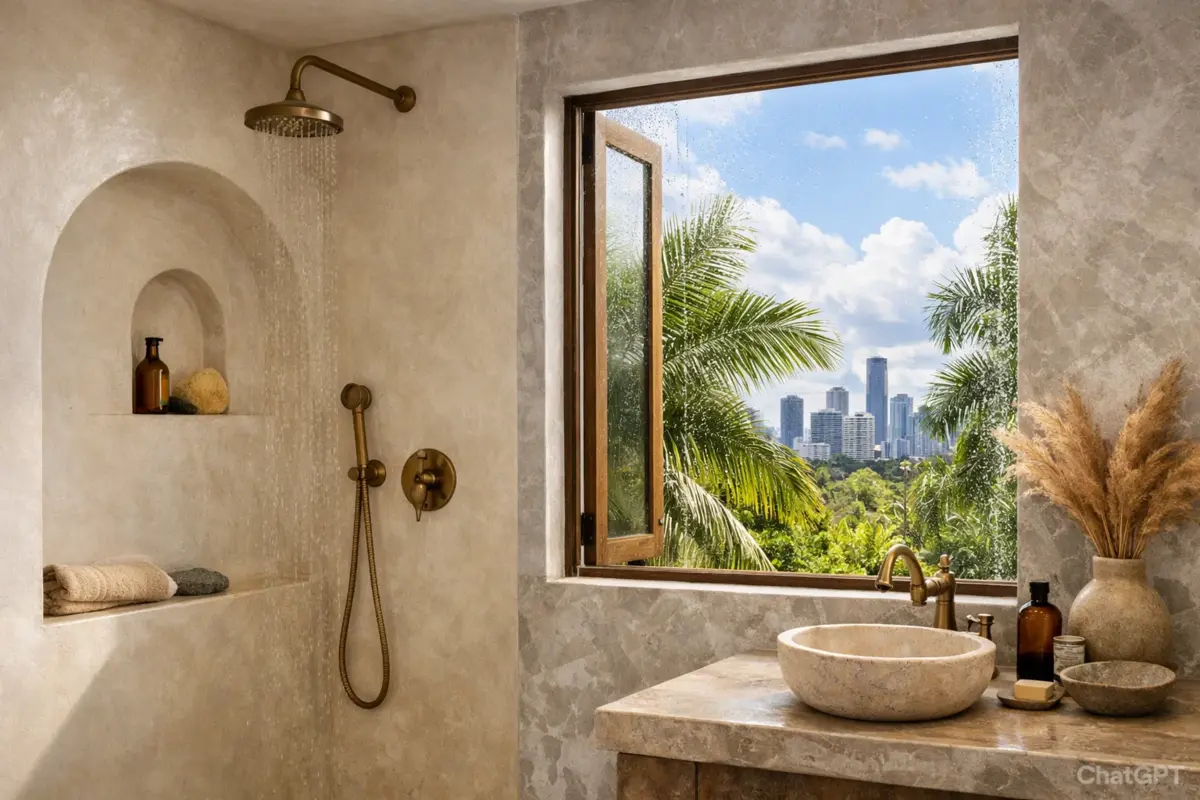
How Tadelakt Venetian Plaster Performs in Brisbane’s Humid Climate: Expert Guide
Brisbane is no stranger to sultry summers and sticky humidity. When you step into a Queensland home or spa-like bathroom, moisture is almost a given. Traditional tiles and paints can get the job done, but there’s a growing buzz about a more exotic, seamless finish: Tadelakt Venetian Plaster. You might be picturing some chic Moroccan riad or an opulent Italian villa, but here’s the twist – Tadelakt Venetian Plaster mashups are finding their way into Aussie design. For Brisbane renovators looking to stand out, Tadelakt Venetian plaster is turning heads.
If you’re curious whether this smooth, lustrous plaster can stand up to Brisbane’s muggy climate, you’re in the right place. I’ll break down the science, myth-bust a bit, and maybe even share a cheeky anecdote. By the end, you’ll know if Tadelakt Venetian Plaster is your home’s new best friend or just a design unicorn.
Understanding Tadelakt and Venetian Plaster
First off, what the heck is Tadelakt Venetian Plaster? Let’s split it up. Tadelakt is an ancient Moroccan lime plaster technique, mixed with natural pigments and slaked lime putty, then burnished with a stone and sealed with black olive soap to create a shining, waterproof surface. Meanwhile, Venetian plaster (stucco Veneziano or Marmorino) comes from Italy, made from lime putty combined with marble dust. When applied in thin, layered coats and polished by hand, it achieves a marble-like, glossy finish.
When we say “Tadelakt Venetian Plaster,” think of it as a combo of Moroccan craft and Italian luxury. Both share superpowers: they’re lime-based and breathable, meaning your walls can exhale moisture instead of locking it in. In practice, that means Tadelakt Venetian plaster absorbs ambient humidity and quietly releases it, which cuts down condensation and helps stop mould growth. Each style has its own DNA: Tadelakt ends up silky with a soft patina, and Venetian plaster shines a bit like polished marble. But crucially for a wet Aussie bathroom, both behave like moisture moderators rather than moisture traps.
Brisbane’s Humidity: Why It’s No Joke
Let’s get real: Brisbane’s summers can feel like a sauna. Brisbane’s average humidity in peak months hovers around 65–70%. That steamy atmosphere turns bathrooms into fog machines and makes mould-and-mildew a homeowner’s nemesis. Paint can peel, grout can go green, and even ordinary plaster might struggle. In contrast, a lime-based finish like Tadelakt Venetian Plaster deals with moisture the way a camphor tree tolerates subtropical monsoons. It breathes moisture out of walls and exudes dampness instead of holding onto it.
Think of it this way: with normal paints or cement-based textures, any water that sneaks in stays put, inviting problems. Here’s a real-world endorsement: Australian design media are buzzing about this too. The Interiors Addict calls Tadelakt “resistant to mould, moisture and humidity” – music to any Brisbanite’s ears. It’s exactly these traits (durability, breathability, eco-friendliness and low maintenance) that make it a winner for our wet, sticky rooms.
Here’s the catch: these finishes only do their job if applied correctly. In fact, experts warn even a tiny nick can let moisture sneak behind the plaster. If that happens, the lime can’t evaporate the water as intended, and you risk delamination or worse, mould. So it pays to hire ace artisans (like us at Avenza Surface Design) who know how to prep the walls and trowel in the magic.
Why Tadelakt Venetian Plaster Excels in Wet Areas
When the going gets humid, the hardworking qualities of Tadelakt Venetian Plaster really shine. Here are some highlights:
-
Natural Water Resistance: Unlike ordinary paint, Tadelakt Venetian Plaster is naturally water-repellent (thanks to that olive-soap sealing step). Picture walls that shrug off splashes and spills rather than soaking them up.
-
Breathability: The lime matrix of this plaster allows water vapor to pass through, so any trapped moisture can slowly diffuse out. Imagine your walls quietly drying themselves overnight – that’s exactly how it works.
-
Mould-Fighting Power: Lime is alkaline, which creates a hostile environment for mould and mildew. In practice, you won’t get that grimy grout smell or fuzzy tile algae – it’s basically nature’s antifungal finish.
-
Seamless Beauty: The result is a smooth, continuous surface. No grout lines or tile seams means fewer nooks for dirt, and a consistent, luxurious look. It feels a bit like living in a slick Moroccan spa rather than a tiled cage.
There’s more. These finishes are also eco-friendly (made from natural lime and minerals, with no nasty VOCs) and tend to get tougher as they age. Tiny decorative cracks (craquelure) that develop actually add character, instead of looking like damage. It’s the opposite of a cheap plaster that peels – in fact, some say it “ages like fine wine.”
However, it’s not all rainbows and roses. Traditional Venetian plaster (without Tadelakt’s olive oil seal) isn’t meant to be blasted with water. It’s great absorbing ambient humidity, but if you pour water on it like a sponge it will eventually lose the battle. So if you were dreaming of a shower completely lined with plain Venetian plaster, think again. (For a fully waterproof surface, microcement or a product like Forcrete is usually recommended in Brisbane showers.) For our purposes, though, even a standard Venetian plaster will cope with humidity – but only Tadelakt Venetian plaster goes the extra mile.
Application and Care in Brisbane’s Climate
So you’re sold on the idea of Tadelakt Venetian Plaster’s superpowers, but how do you actually get it on the wall? Spoiler: it’s not a paint-can project. Tadelakt Venetian Plaster is an artisanal multi-layered finish. We start by building up thin coats of slaked lime putty (often with a marble dust for strength), letting each cure. Then comes the burnishing: smoothing each layer by hand with a steel trowel and finishing stone. Finally, the magic olive-oil soap is rubbed in to seal it. Think of it like sculpting your walls with plaster and then giving them a glossy olive oil bath.
It might sound intense, but maintenance is a breeze once it’s done. You can wipe it with a soft cloth and a solution of water or black soap. No bleach or gritty scrubbing needed. Spills bead on the surface and can be blotted quickly. It’s basically as easy as cleaning a glass shower door. Just be gentle: no steel wool or harsh acids. Treat it a bit like caring for a vintage marble tabletop – admiration, not abrasion.
Because of all this nuance, we at Avenza Surface Design usually handle wet-area Tadelakt installations. We’ll apply waterproof membranes to code, prep your walls, and expertly coat showers, basins, or feature walls. The result is a bathroom or laundry that feels like a sunlit Moroccan hammam, right here in Brisbane.
A Quick Comparison
| Feature | Tadelakt Venetian Plaster | Venetian Plaster (Traditional) | Ceramic Tiles |
|---|---|---|---|
| Water Resistance | Naturally water-repellent when sealed (excellent for wet areas) | Water-resistant but not fully waterproof (best above splash level) | Fully waterproof surface, though grout lines can leak over time. |
| Breathability | High – lime plaster lets walls breathe (moisture escapes) | High – also lime-based and vapour-permeable | Low – non-porous, so trapped moisture can build under grout. |
| Mould/Mildew | Excellent – high pH and no organic binders fend off growth | Good – high pH of lime helps resist mould | Variable – tiles themselves inert but grout and caulk can grow mold. |
| Appearance | Seamless, silky satin finish with subtle variations | Polished, marble-like look with classic sheen | Versatile designs; can be elegant or utilitarian, but with grout lines. |
| Maintenance | Low – simple wipe-clean (use black soap occasionally) | Low – wipe-clean; may need occasional resealing | Moderate – needs grout cleaning and occasional re-sealing. |
Conclusion: Breathe Easy in Style
Brisbane’s humid climate no longer has to cramp your style or your wall finishes. Tadelakt Venetian plaster offers a beautiful, durable, mould-resistant alternative that actually uses humidity to its advantage. Our skilled team at Avenza Surface Design can deliver all the tactile elegance – those silky textures and soft gleams – without the damp headaches.
To sum up, this finishing technique is as much about brains as beauty. It draws on ancient Moroccan know-how and modern Aussie craftsmanship to deliver something uniquely suited for our tropical homes. If you’re itching for a bathroom or feature wall upgrade, consider swapping slippery tiles for a seamless plaster sanctuary. It’s a statement that’s on-trend and truly practical.
Curious about trying it yourself? Design media celebrate Tadelakt’s performance, noting it “is resistant to mould, moisture and humidity” – an endorsement that feels like a high-five in sticky weather. Drop us a line at Avenza Surface Design; we’ll guide you through options, share samples, and help bring that exotic Tadelakt Venetian plaster spa vibe to your Brisbane home.
FAQs
-
What is Tadelakt Venetian Plaster?
It’s a fusion of Moroccan Tadelakt and Italian Venetian plaster techniques. In short, it’s a lime-based decorative plaster finished with olive oil soap, giving walls a seamless, water-resistant coat.
-
Is it suitable for Brisbane’s humid climate?
Absolutely. Its lime composition makes it highly breathable (moisture diffuses through it) and naturally resistant to mould. Many coastal and tropical Queenslanders choose it for wet rooms and bathrooms.
-
How does it compare to regular Venetian plaster?
Traditional Venetian plaster looks similar but lacks the deep waterproof seal. Tadelakt Venetian plaster has that extra olive-soap step which boosts water resistance. Venetian plaster alone must stay above heavy splashes, whereas a Tadelakt finish can better handle high moisture.
-
Can I use it in showers and laundries?
Yes – when done right. With proper membranes and sealing (all part of Avenza’s process), it’s excellent for showers, baths, sinks and splashbacks. Just be sure it’s applied by experienced pros to avoid moisture behind the plaster.
-
Why choose Tadelakt Venetian plaster over tiles?
Tiles are rigid and require grout which can mildew. By contrast, Tadelakt Venetian plaster creates a seamless, spa-like surface that naturally resists moisture. It’s often called the “no grout” finish designers love.