
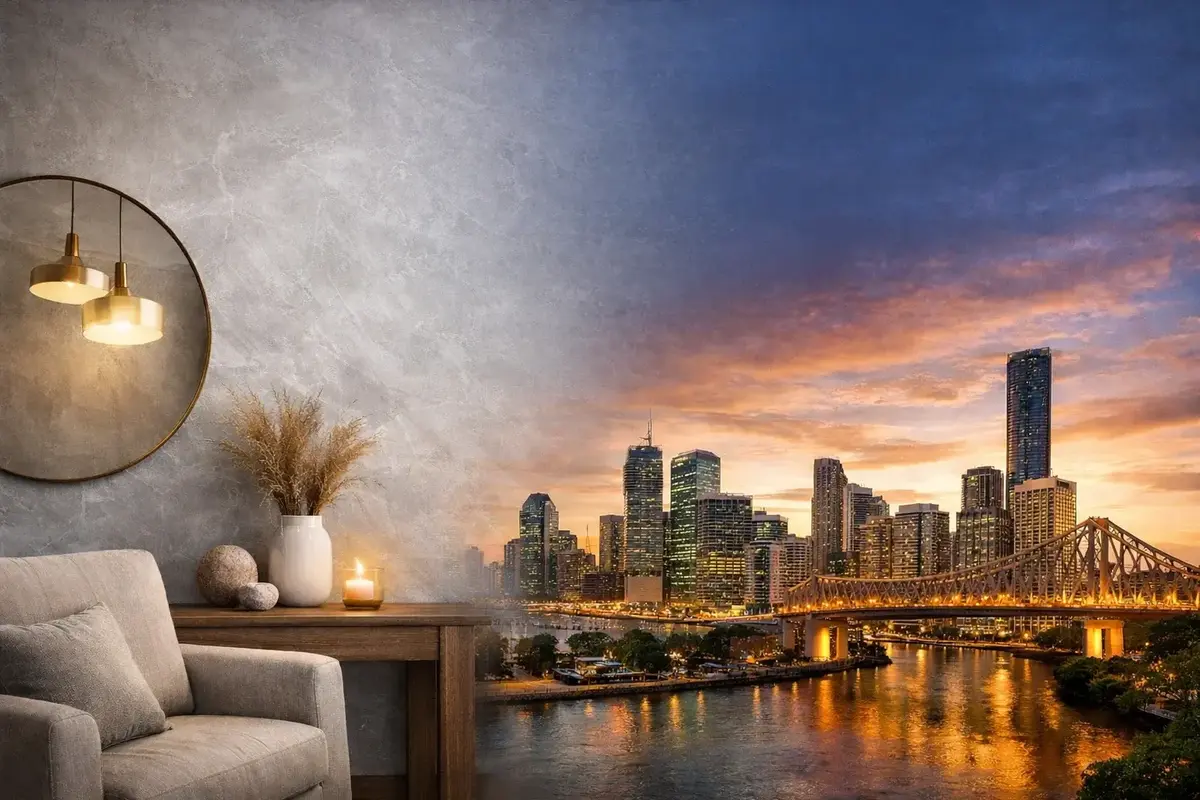
Expert Guide to Marmorino Wall Finish in Brisbane: Benefits, Costs & Applications
A wall can do more than just hold up a ceiling. In many Brisbane homes and commercial spaces, walls have quietly stepped into the spotlight, textured, polished, and almost alive with depth. That’s where Marmorino Wall Finish enters the scene.
Having seen this finish applied across everything from tight inner-city apartments to breezy Queenslanders, one thing becomes clear pretty quickly: it behaves differently depending on the space, the light, and even the tradesperson handling it.
In Brisbane specifically, where humidity, sunlight, and lifestyle all collide, Marmorino Wall Finish sits in a unique position. It’s not just decorative; it’s functional in subtle ways that only show up after months or years of use. But getting there takes decisions, trade-offs, and sometimes learning things the hard way.
Across Brisbane, interiors are shifting. Clean lines are staying, but flat, lifeless paint is slowly walking out the door. In its place, finishes with depth, character, and a bit of personality are taking over. And honestly, nothing does that better than Marmorino Finish.
Why Marmorino Wall Finish suits Brisbane homes
Brisbane homes tend to breathe differently compared to southern builds. Timber structures, raised floors, and open ventilation all play a role, and that’s exactly where Marmorino Wall Finish finds its rhythm.
On one project in the West End, a standard acrylic paint job had to be redone twice due to bubbling and minor mould spotting. Switching to a Marmorino wall finish didn’t magically fix ventilation issues, but it stopped the wall from reacting so aggressively to moisture swings.
That said, it’s not a miracle solution. Poor airflow, bad insulation, or structural dampness won’t disappear just because a lime plaster is applied. There’s a tendency to oversell it as a cure-all, which leads to disappointment. In reality, it works best as part of a broader approach to building performance, not a shortcut around it.
Understanding lime plaster behaviour in humidity
Lime plaster behaves in a way that feels almost old-fashioned, especially in a market dominated by synthetic coatings. It absorbs and releases moisture slowly, which means walls don’t feel as cold or clammy during Brisbane’s wetter months. That subtle shift in how a room feels often surprises people more than the visual impact.
In practice, this behavior also means drying times can be unpredictable. A wall that looks ready for the next coat in the morning might still hold moisture beneath the surface. Rushing the process is one of the most common mistakes seen with Marmorino Wall Finish, particularly when timelines are tight and trades overlap.
There’s also a texture element tied to humidity. On particularly damp days, the finish can appear slightly darker or richer, almost like stone after rain. Some clients love that variation. Others expect a perfectly consistent tone and get uneasy when the wall shifts slightly with the weather. It’s a small detail, but one worth understanding up front.
Real cost breakdown of Marmorino in Brisbane
Pricing for Marmorino Wall Finish often gets thrown around loosely, but real-world costs rarely sit neatly within advertised ranges. While figures like $120 to $250 per square meter are common, they assume ideal conditions: flat walls, easy access, and no surprises lurking underneath.
In older Brisbane homes, especially post-war builds, surface preparation can quietly double the labour component. Uneven plasterboard, patched surfaces, or previous paint layers all need attention before the first coat even goes on. Skipping this step to save money usually leads to visible imperfections that no amount of polishing can hide.
Another cost factor that catches people off guard is sampling. Achieving the right tone and texture often involves multiple test patches, each requiring time and material. It’s not unusual for clients to change direction midway once they see how light interacts with the finish. Those adjustments add up, both financially and in project timelines.
Where this finish works best inside properties
Not every wall needs the treatment. In fact, overusing Marmorino Wall Finish can dilute its impact and make a space feel overworked rather than refined. The strongest results tend to come from the selective application of feature walls, entryways, or areas where natural light can highlight texture.
In one Fortitude Valley apartment, applying the finish across all walls created a slightly heavy atmosphere, especially in rooms with limited daylight. Scaling it back to a single living area wall transformed the space, giving it focus without overwhelming the rest of the interior. Restraint often produces better outcomes than full coverage.
Bathrooms are another interesting case. While Marmorino Wall Finish can be sealed for wet areas, it requires careful detailing around joints and fixtures. Water exposure over time can reveal weaknesses in the application, particularly if corners or edges weren’t handled properly. It works beautifully in powder rooms but demands more caution in full showers.
Marmorino Finish vs Paint vs Other Plasters
| Feature | Marmorino Wall Finish | Standard Paint | Acrylic Plaster |
| Durability | High | Medium | Medium |
| Breathability | Excellent | Low | Low |
| Aesthetic Appeal | Premium | Basic | Moderate |
| Maintenance | Low | Medium | Medium |
| Eco-Friendly | Yes | No | Limited |
Common installation errors and how they happen
Even experienced tradespeople can struggle with Marmorino Wall Finish if they’re more familiar with standard plastering or painting. The technique involves layering, pressure control, and timing that don’t translate directly from other finishes. Small inconsistencies become very visible once the surface dries.
One recurring issue is over-polishing. In an attempt to achieve a high-end sheen, some applicators compress the surface too much, which can lead to dark burn marks or uneven gloss levels. It’s the kind of mistake that only becomes obvious once light hits the wall at certain angles, usually after the job is signed off.
A common headache is inconsistent mixing. Even a tiny shift in the pigment or water ratio can leave you with a patchy wall. You might not see it the moment it dries, but as the sun moves across the room, those ghost patches start to stand out more than you’d ever expect.
Maintenance realities homeowners rarely expect
There’s a perception that Marmorino Wall Finish is completely maintenance-free. While it’s certainly more forgiving than painted surfaces, it still requires a bit of awareness. Marks don’t sit on the surface the same way they blend in, which is good, but also makes spot cleaning less straightforward.
In the busier parts of the house, you’ll eventually see subtle scuffs that highlight the importance of National Construction Code condensation management in maintaining surface integrity. They aren’t deep scratches; they’re more like slight shifts in tone.
Sealing is a big part of the job, especially in high-moisture spots like kitchens and bathrooms. Those protective layers eventually wear down from grease or steam. While reapplying a sealer isn’t a massive project, it really needs a professional touch to make sure the finish stays consistent across the whole wall.
Comparing Marmorino to paint and microcement
Paint, microcement, and Marmorino wall finishes are often compared, but they serve slightly different purposes. Paint is quick, predictable, and easy to refresh. Microcement offers a more industrial look with higher water resistance. Marmorino sits somewhere in between, leaning toward texture and natural variation.
In terms of durability, Marmorino tends to outperform standard paint but doesn’t have the same hardness as microcement. That means it’s less prone to chipping than paint but can still show wear in high-impact zones. Choosing between them often comes down to how the space will actually be used, not just how it looks on day one.
There’s also a cost-to-value consideration. While Marmorino Wall Finish is more expensive upfront, it doesn’t need frequent repainting. Over a decade, that can balance out financially, but only if the installation is done properly from the start.
Choosing the right applicator and finish style
Finding the right applicator for Marmorino Wall Finish is less about price and more about experience. Portfolios matter, but so does the ability to explain the process clearly. Tradespeople who rush through explanations often rush through the work as well.
Style selection can be surprisingly tricky. What looks subtle in a showroom might feel too busy in a home setting. Lighting plays a huge role here, especially in Brisbane, where natural light can be quite harsh at certain times of the day. Testing samples on-site is almost always worth the extra effort.
There’s also a communication aspect that gets overlooked. Expectations around texture, sheen, and variation need to be aligned early. Without that clarity, even a technically well-executed Marmorino wall finish can feel wrong simply because it doesn’t match what was imagined.
How Marmorino is Evolving in Brisbane
Design trends shift, but marmorino Venetian plaster continues to adapt.
Current Trends:
- Warm earthy tones (sand, clay, taupe)
- Textured feature walls in open-plan homes
- Matte finishes over glossy surfaces
- Pairing with timber and concrete
Long-term value and resale considerations locally
From a resale perspective, Marmorino Wall Finish sits in an interesting position. It doesn’t guarantee a higher sale price, but it can influence how a property is perceived. Buyers often respond to texture and depth subconsciously, even if they can’t name the finish.
In the Brisbane property game, those little details really change the vibe during an inspection. A high-end wall finish makes the whole place feel more curated and high-end, which tends to catch the eye of the right buyer. It’s less about a direct dollar-for-dollar increase and more about creating that wow factor.
That said, going too bold can actually shrink your pool of buyers. Heavy textures or dark colors aren’t for everyone. A neutral, well-balanced Marmorino wall finish usually has a much wider appeal and tends to age more gracefully over the years.
Conclusion
Walls don’t have to just fade into the background anymore. A Marmorino wall finish brings in a refined texture and a natural depth that feels luxurious without being loud. From city apartments to high-end shops, it completely changes how you experience a room.
If you’re planning an interior upgrade that balances durability with visual impact, Marmorino is a smart choice. Designed to last and impress quietly, it transforms ordinary surfaces into standout features. Contact us today to explore how it can enhance your space.
Frequently Asked Questions
-
What is Marmorino wall finish made of?
A proper Marmorino wall finish is made from lime putty and crushed marble, which creates a natural, breathable surface. It gives you that beautiful stone-like feel while staying eco-friendly and tough, perfect for the Brisbane lifestyle.
-
Is Marmorino Finish suitable for Brisbane weather?
Yes, Marmorino Finish Brisbane works well in humid conditions. Its breathable nature prevents moisture buildup, reducing mould risks and keeping walls stable over time.
-
How long does marmorino plaster last?
A good Marmorino plaster job can easily last over 20 years if it’s looked after. It’s way tougher than standard paint, so even though it’s an investment up front, it really pays off for both homes and businesses in the long run.
-
Can marmorino Venetian plaster be used in bathrooms?
Definitely, Marmorino Venetian plaster works beautifully in bathrooms as long as it's sealed correctly. It handles the moisture well and gives the whole space that high-end, spa-like atmosphere.
-
Is marmorino plaster expensive in Brisbane?
Getting Marmorino plaster Brisbane done will cost more than a standard paint job initially, but the look and durability are on a different level. The final price just depends on how complex the finish is and how much wall space we're covering.