
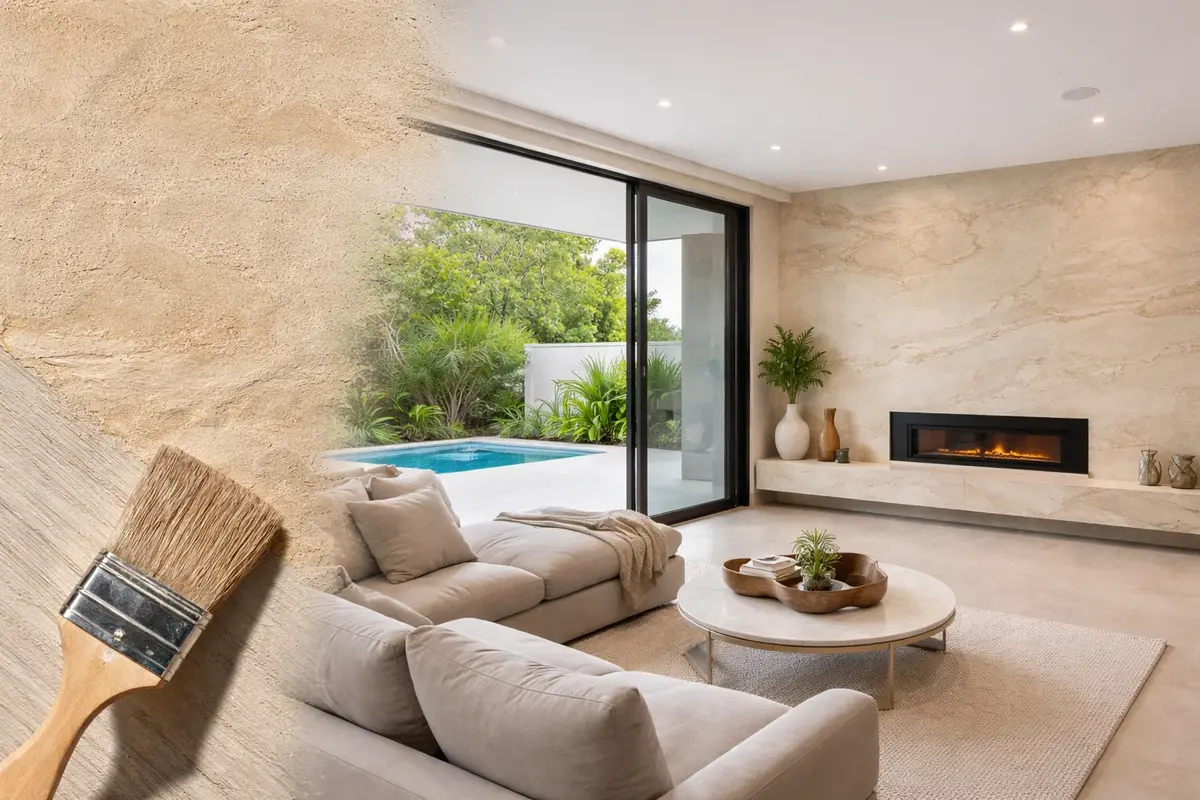
Travertino Plaster Brisbane: Benefits, Costs, and Expert Application Guide
Brisbane homes have changed. Clean lines. Natural textures. Soft, earthy tones. Glossy painted walls no longer feel enough. Surfaces now need depth, character, and that quiet luxury look seen in high-end architectural builds.
Travertino Plaster creates a stone-like finish that feels solid, textured, and timeless. It blends Mediterranean charm with modern Brisbane design trends. In coastal homes, inner-city apartments, and boutique commercial spaces, this finish has become a strong design choice for those wanting something refined but not flashy.
This guide breaks down Travertino Plaster Brisbane in a practical way. We’ll cover the perks, the costs, and how to look after it, giving you a clear roadmap for your next renovation or new build.
What Is Travertino Plaster and Why Brisbane Homes Love It
Essentially, it’s a decorative lime plaster that looks just like real travertine stone. It has this incredible movement and depth to it, unlike flat paint, the texture actually catches the light and changes slightly as the day goes on.
Travertino Venetian plaster is a variation that combines polished Venetian techniques with travertine-inspired texture. The result feels more architectural than traditional wall finishes.
Brisbane homeowners are drawn to it for several reasons:
- Warm, natural appearance
- Breathable lime composition
- Mould resistance in humid climates
- Unique hand-applied texture
- Premium visual appeal
In a city with warm weather and modern design trends, travertino plaster Brisbane projects often aim for that soft, European-inspired aesthetic without using heavy stone cladding.
Understanding the Material Composition and Why It Performs Well in Humid Climates
Travertino plaster is generally lime-based, sometimes blended with marble dust or fine aggregates. That lime base matters in Queensland conditions. Lime breathes. It allows moisture vapor to pass rather than trapping it between the substrate and surface.
In Brisbane’s humid environment, that quality reduces bubbling and mold risk compared to standard acrylic paints. I’ve worked on older Queenslanders where previous paint systems peeled within three years due to trapped moisture.
Switching to a breathable plaster didn’t magically solve structural damp issues, but it reduced surface failures noticeably. The wall felt more stable over time. Clients noticed fewer patches and less repainting. That’s not marketing spin; it’s job-site observation.
That said, breathability doesn’t replace proper waterproofing. Bathrooms and kitchens still require sealing systems. Travertino Venetian plaster can handle moisture, but only when applied correctly and sealed properly. Skipping the seal coat to save money often leads to staining or inconsistent sheen. The material performs well, but it still depends on disciplined application.
Cost Breakdown and Financial Realities of Travertino Plaster Brisbane Projects
Let’s be real: talking about the cost of Travertino Plaster Brisbane usually catches people off guard. It’s a significant jump from standard paint.
For a feature wall, you’re looking at roughly $120 to $180 per square meter, sometimes more if the texture is intricate or the wall is hard to reach. On big commercial jobs, those rates usually shift depending on the total volume and how much prep work is involved.
What many clients miss is the labor intensity. This finish is not rolled out in an afternoon. It involves multiple layers, careful timing, hand trowelling, and often carving or filling to achieve the travertine effect. Rushing this stage creates uneven texture and patchy color depth. Fixing a poorly applied wall can cost almost as much as starting fresh.
There’s also the longer view. Standard paint may need refreshing every five to seven years, especially in high-traffic areas. Travertino plaster, properly sealed, can last much longer with minor maintenance. Over a decade, repaint cycles add up. The initial investment looks steep, but the lifecycle cost evens out more than people expect.
Travertino Plaster Brisbane vs Standard Paint: A Clear Comparison
Below is a practical comparison:
| Feature | Travertino Plaster | Standard Paint |
| Texture Depth | High | Flat |
| Breathability | Excellent | Low |
| Mould Resistance | Natural lime protection | Requires additives |
| Lifespan | 10–20+ years | 5–7 years |
| Maintenance | Low | Moderate repainting |
Paint covers. Travertino Plaster transforms. For feature walls in Brisbane homes, that difference becomes immediately visible.
Surface Preparation Challenges and the Consequences of Cutting Corners
Preparation determines outcome more than most realize. Walls must be clean, level, and structurally sound. Small imperfections become amplified once textured plaster is applied. I’ve seen minor plasterboard joints telegraph through a finished surface because prep was rushed to meet a tight handover deadline.
On one project, the builder insisted the wall was ready. It wasn’t. Subtle undulations created inconsistencies in the shadows after the Travertino finish had cured. The only fix involved sanding back sections and reapplying layers. That delay costs both time and money, not to mention client frustration. Prep work rarely excites anyone, but skipping it is expensive.
Humidity also influences drying time. Brisbane summers can be slow curing unpredictably. Applying subsequent coats too early traps moisture and risks cracking. Experienced applicators read the room, literally. Airflow, temperature, and substrate condition all matter. That judgment call cannot be outsourced to a timetable on paper.
Travertino Venetian Plaster Techniques That Separate Professionals from Amateurs
The trowel technique significantly influences the aesthetic outcome. Pressure control, angle variation, and timing between passes determine texture depth.
Travertino Venetian plaster demands rhythm. Too much pressure flattens the movement. Too few leaves, awkward ridges. It’s a craft learned through repetition, not online tutorials.
Carving lines to mimic natural stone veins requires steady hands and patience, much like the precision required to meet the standards of the Queensland Building and Construction Commission. Over-carving looks artificial, under-carving feels unfinished, and I’ve watched apprentices struggle with consistency for months before producing balanced results. That learning curve explains why skilled installers command higher rates.
Clients sometimes ask why DIY isn’t recommended. It’s possible, but rarely satisfying. I’ve been called to inspect self-applied surfaces that looked uneven and chalky. Repairing those attempts involved stripping back layers and starting again. The cost doubled. Travertino plaster rewards precision, not experimentation.
Design Integration and Lighting Considerations That Elevate the Finish
Lighting changes everything. Downlights aimed directly at textured surfaces exaggerate depth beautifully. Flat, diffused lighting dulls the effect. During site visits, adjusting a single spotlight has transformed how a wall reads. The plaster didn’t change; the light did.
Color selection also requires restraint. Earthy neutrals, soft beiges, and muted greys suit Brisbane interiors best. Bold colors compete with the natural texture. A client once requested a saturated blue Travertino finish. It looked striking initially but felt overpowering in daily living. Subtlety ages better.
To get the best look, pair it with natural textures like timber, brass, or linen. You want the wall to feel like part of the room, not a lonely feature competing with high-gloss cabinets or loud patterns. It’s all about balance.
Long-Term Maintenance and Repair Considerations Often Overlooked by Homeowners
Keeping it clean is actually pretty easy. A light dust and a gentle wipe-down usually do the trick. Just stay away from harsh chemicals that eat the sealer. If it’s in a high-traffic spot, you might need a fresh seal every few years.
Minor scuffs can often be blended rather than fully refinished. That flexibility reduces maintenance disruption. However, color matching later requires skilled assessment. Natural lime finishes shift slightly as they age. Touch-ups must consider patina development.
Neglecting maintenance can lead to potential issues. I’ve seen coffee spills left on cafe walls until they soaked right through the sealer, something a quick wipe could have fixed. It’s tough stuff, but it’s not bulletproof; a little care goes a long way.
Common Misconceptions About Travertino Plaster in Brisbane Homes
People often assume this is only for high-end builds, but it actually works great for modest renos too. Just one feature wall can completely flip the feel of a room without you having to gut the entire space.
Another misconception is that lime plaster cracks easily. Proper substrate preparation and controlled curing minimize that risk. Cracking usually traces back to rushed drying or unstable wall framing, not inherent material weakness.
There’s also the idea that textured finishes fall out of fashion quickly. Travertino has endured centuries in European architecture. Trends shift, but natural materials rarely become obsolete. Overly trendy colors fade faster than stone-inspired texture.
Balancing Budget, Aesthetic Ambition, and Realistic Expectations in Projects
Budget discussions are not always enjoyable. Since Travertino is pricier than paint, you don’t need to do every wall. Strategically using it in an entryway or living room allows you to maximize your investment without depleting your entire renovation budget.
Clients sometimes request full-home applications, then hesitate once pricing becomes clear. Scaling back to key areas often achieves a stronger overall design. Concentration amplifies effect. Spread too thin, the finish loses distinction.
Expectation management remains essential. Travertino is hand-applied. Subtle variation is part of its charm. Those seeking factory-perfect uniformity may feel unsettled. Embracing slight movement and tonal change creates authenticity. Perfection in this context feels artificial.
Travertino Plaster Brisbane and the Influence of Contemporary Architecture
Local design is moving toward soft palettes and seamless indoor-outdoor flows. Travertino Plaster Brisbane fits that vibe perfectly. It plays well with rendered exteriors and minimalist rooms without feeling like it’s trying too hard.
We’re seeing more architects call for lime-based finishes for the sake of sustainability. They have a lower carbon footprint than synthetic coatings, which really resonates with eco-conscious clients looking for more thoughtful material choices.
Commercial spaces also embrace the finish. Boutique hotels and cafés use it to add depth without installing heavy stone. In those environments, durability matters as much as appearance. Proper sealing becomes critical under heavy foot traffic and constant cleaning.
Conclusion
There’s a sense of quiet luxury and depth that Travertino brings to local interiors. It works perfectly with our climate and modern architecture, giving you that organic stone look without the weight or hassle of heavy cladding.
Travertino Venetian plaster offers flexibility in finish and tone, while professional installation ensures longevity and performance.
Are you prepared to revolutionize your interior spaces using Travertino Plaster? Contact us today for a personalized consultation and detailed quote. Elevate walls with texture that lasts.
Frequently Asked Questions
-
How long does Travertino Plaster last in Brisbane conditions?
Properly applied and sealed, Travertino plaster easily lasts 15 to 20 years. Because it’s lime-based, it naturally fights off mold and moisture, a huge plus for Brisbane’s humidity. A bit of light, regular upkeep is all it takes to keep that refined look intact.
-
Is Travertino Venetian plaster suitable for bathrooms?
Yes, Travertino Venetian plaster can be used in bathrooms when properly sealed. It handles moisture better than standard paint due to its breathable lime composition. Professional sealing is essential for splash zones and wet areas.
-
What makes Travertino plaster in Brisbane different from regular decorative plaster?
Travertino plaster offers a natural stone texture and carved depth that standard decorative plasters do not replicate. Travertino Venetian plaster adds further polish and refinement, delivering a high-end architectural finish suited to Brisbane interiors.
-
Can Travertino plaster be applied over existing painted walls?
Yes, but surface preparation is critical. Walls must be stable, clean, and primed properly. A professional installer assesses surface condition before applying Travertino Plaster to ensure strong adhesion and long-term durability.
-
Does Travertino plaster increase property value?
This finish does wonders for a home's wow factor and perceived quality. You can’t always pin an exact dollar amount on value increases, but in a crowded Brisbane market, premium finishes like this definitely grab buyer attention and set a property apart.