Oxidation Wall Finishes Brisbane: A Complete Homeowner’s Installation Guide
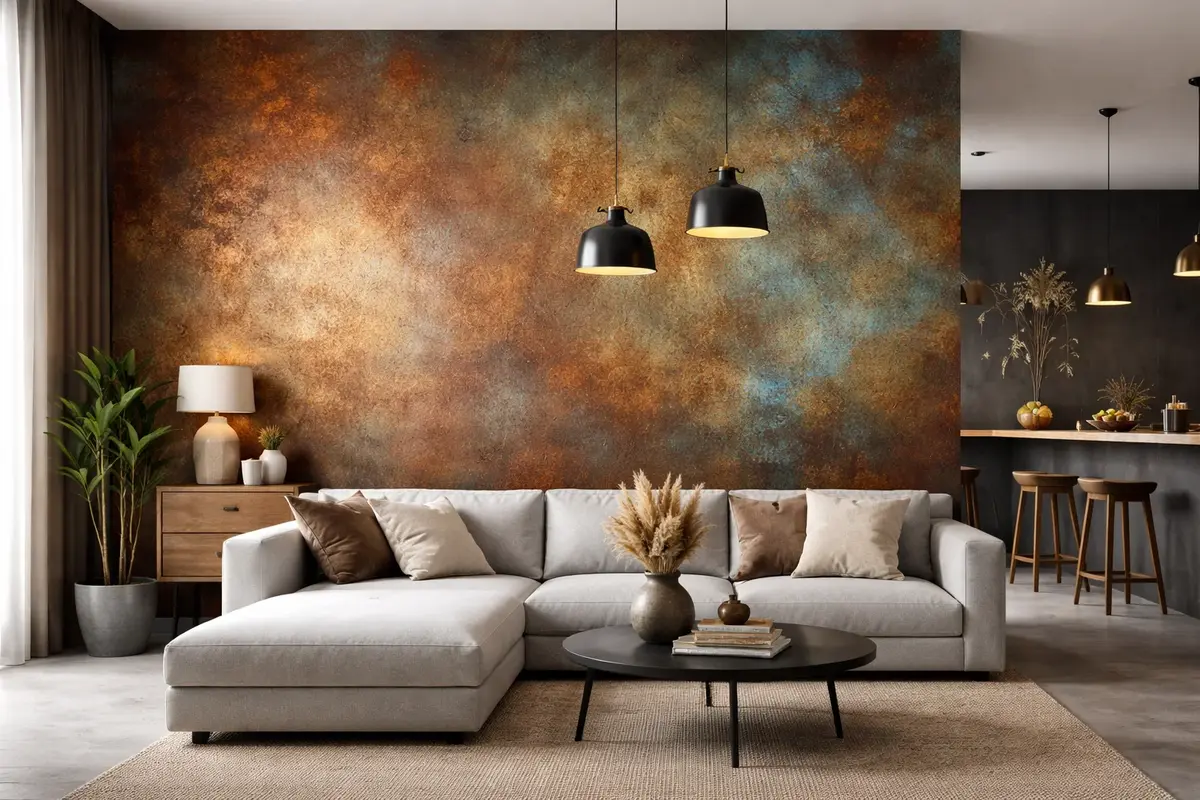
Imagine a wall that looks like it’s wearing a rich, rusted leather jacket – edgy, textured, and totally unique. That’s the magic of an oxidation wall finishes, where we deliberately age and corrode a surface to create a raw, industrial-chic look. It’s as if nature designed a gritty art piece on your wall. In Brisbane, where modern open-plan homes meet humid subtropical weather, homeowners are loving oxidation finishes. They add character and warmth, turning plain walls into conversation-starting features you have to touch. Trust me, once you see oxidation texture in a stylish café or loft, you’ll be itching to try it yourself.
Oxidation wall finishes speed up nature’s slow rusting process. In simple terms, “oxidation” means metals reacting with oxygen (and moisture) to form metal oxides – think rust. A great description calls oxidation a “decorative finish which makes a surface look like it has corroded and aged”. We harness that science: by mixing in real metal particles (like iron or copper flecks) and spraying on a safe oxidizing solution, we chemically “rust” the wall. The result is an artistic patina that feels warm and handcrafted. (Render Revolution in Brisbane even notes that adding metallic flakes to Venetian plaster can give a “rusted finish” that looks like aged metal but is smooth to touch.)
Why Brisbane Homeowners Are Loving Oxidation Wall Finishes
Brisbane’s style is all about laid-back luxury and indoor–outdoor flow. Bright, open-plan living means blank walls can feel boring – they need to pop. That’s why luxury surface treatments like metallics and plasters are on the rise. Oxidation wall finishes fit right in: they “mimic the effects of natural ageing, such as rust, patina, or weathered metal,” giving a “raw, industrial look that feels artistic and modern”. Picture a lounge room where one wall looks like an abstract rust mural – it’s bold but also surprisingly cosy.
Locally, experts note that Brisbane homes favor finishes that work with light and space. Oxidation textures have depth and movement, and they “suit Brisbane’s light-filled interiors” by reflecting sunlight off warm, earthy tones. They also “add value to homes” and pair beautifully with modern Australian architecture. Think concrete floors, timber beams, and a feature wall that looks like it’s aged in an art gallery. In short, oxidation walls feel fresh and on-trend in Brissie: they’re a statement for contemporary or industrial-style homes, creating that edgy loft-vibe without the chill of real metal.
Benefits of Oxidation Wall Finishes
-
Unique Texture & Look: No two oxidation walls are alike. The random drip patterns and colour variations mean your wall literally becomes one-of-a-kind art.
-
Durable & Low Maintenance: Once sealed, the finish is surprisingly tough. It’s more durable than regular paint and “ages beautifully over time” rather than showing dirt or scuffs. A quick dust or gentle wipe is usually enough upkeep.
-
Breathable & Safe for Brisbane: Many oxidation systems use lime- or clay-based mediums (like Venetian plaster) as a base, which are breathable and mold-resistant – perfect for QLD’s humidity. (Render Revolution notes that lime plasters allow walls to “breathe,” making them good for humid spots.)
-
Versatile Indoor or Out: You can use oxidation coatings indoors or outside. For example, Renaissance Decor points out that this decorative “oxidation wall finishes” can be applied on interior or exterior walls. Imagine a dramatic rusted patio wall or a feature dining nook – the look lasts.
-
High-End Impact: It instantly elevates a space. Instead of standard paint, an oxidation wall becomes the luxury detail that feels intentional and designer. It pairs amazingly with warm neutrals and raw materials (think concrete, wood, leather) for that earthy, high-end vibe.
Where You Can Use Oxidation Wall Finishes
You might think Oxidation Wall Finishes only belong in trendy cafes. Not true. I’ve seen them transform:
- Living room feature walls
- Bedroom headboard walls
- Home offices
- Entry foyers
- Outdoor entertaining areas
- Commercial spaces
Because Oxidation Wall Finishes are versatile, you can use them as a bold statement or a subtle textured backdrop. The trick is balance. One feature wall is usually enough to anchor a room.
Step-by-Step Installation Guide For Oxidation Wall Finishes In Brisbane
Here’s a detailed walkthrough. Don’t rush each stage – the magic happens in layers and waiting for reactions.
-
Prep and Prime the Wall: Make sure the wall is clean and dry. Apply a good-quality wall primer (often 1–2 coats) so that the finish will stick evenly. If the wall is bare plaster or concrete, use a primer like “Primer for wall coatings” and let it dry for 4–8 hours. Avoid wallpaper or oil-based paint surfaces entirely – oxidation products won’t bond there.
-
Apply the Metallic Base Coat: Mix your metal-infused coating (often iron-oxide plaster or tinted skim coat) until smooth. Using a spatula or trowel, apply a thin, even coat over the wall. (Some systems call this the “Oxidized Steel Coating” or base coat.) Work quickly to avoid streaks. Let it dry fully, about 8–10 hours. A second coat can deepen the effect but be careful: over-application can cause tiny cracks.
-
Spray on the Oxidizer: This is the fun part. Put on gloves and goggles. Pour the oxidizing solution into a sprayer or bottle and mist it onto the dried base coat. Keep the nozzle about 30 cm (1 foot) from the wall, spraying in an irregular, random pattern. You’ll see the colour begin to change – that’s the rust forming! Quick tip: start light. You can always add more layers to intensify the effect. Any drips or runs will just add character (like a real rust stain), so embrace the uneven look.
-
Wait and Repeat as Needed: Patience is key. After spraying, the wall will slowly brown and red over time – often 2 to 8 hours for each pass. The oxidizer is a gel that reacts on the surface; you’ll see rusty “bloom” appear gradually. You can re-spray when previous areas dry down, building depth and contrast. This layered look is what makes oxidation finishes so cool – it’s unpredictable, like art.
-
Seal the Finish: Once you’re happy with the patina (dry to the touch, usually 8–12 hours later), do not skip sealing. Apply a clear acrylic or polyurethane sealer. This fixes the look and stops the metal particles from flaking off. Using a foam roller, spread a thin coat of sealer over the entire surface in an even pattern. Let it dry 4–6 hours. This final coat ensures the wall isn’t dusty or touchy – it becomes a resilient surface.
-
Clean Up: Rinse your tools (sprayer, spatula, brush) immediately after each stage. Neutralize leftover oxidizer with water before disposal (it’s water-based). You’ve turned a normal wall into a dramatic focal point – congratulations!
Here’s a handy summary table of the process:
| Step | Action | Product/Notes | Drying Time |
|---|---|---|---|
| Prepare | Clean wall, remove fixtures | – | – |
| Prime Wall | Apply primer (1–2 coats) | Masonry or wall primer | 4–8 hours per coat |
| Metallic Base | Trowel on oxidation base plaster | Iron-oxide/metallic base coat | 8–10 hours |
| Oxidize | Spray on oxidizer (multiple passes) | Oxidizer solution | ~2–8 hours (per pass) |
| Seal Surface | Roll on clear sealant | Water-based acrylic/polyurethane | 4–6 hours |
Maintenance of Oxidation Wall Finishes
Good news. Oxidation Wall Finishes are not high-maintenance.
Here’s how to care for them:
- Dust occasionally with a soft cloth
- Wipe gently with damp cloth if needed
- Avoid harsh chemicals
- Do not scrub aggressively
Because they are sealed, Oxidation Wall Finishes resist moisture and surface damage. In Brisbane’s humid climate, that protection matters.
Design Tips for Styling Oxidation Wall Finishes
Want your Oxidation Wall Finishes to look intentional?
Here’s what I recommend:
- Pair with warm timber
- Use matte black or brushed brass fixtures
- Keep surrounding walls neutral
- Add soft lighting to highlight texture
- Avoid over-decorating the feature wall
Think of Oxidation Wall Finishes as artwork. Let them breathe.
Cost of Oxidation Wall Finishes in Brisbane
Costs vary depending on:
- Wall size
- Complexity of design
- Surface condition
- Product choice
Because Oxidation Wall Finishes are a premium decorative finish, they cost more than standard paint. However, they also create significantly more impact and value. For accurate pricing, contact Avenza Surface Design for a tailored quote.
Why Choose Avenza Surface Design for Oxidation Wall Finishes
At Avenza Surface Design, we specialise in high-end decorative surfaces, including Oxidation Wall Finishes.
We focus on:
- Expert surface preparation
- Premium materials
- Customised texture control
- Long-lasting sealing systems
When you invest in Oxidation Wall Finishes, quality application makes all the difference.